
Last updated November 22, 2026
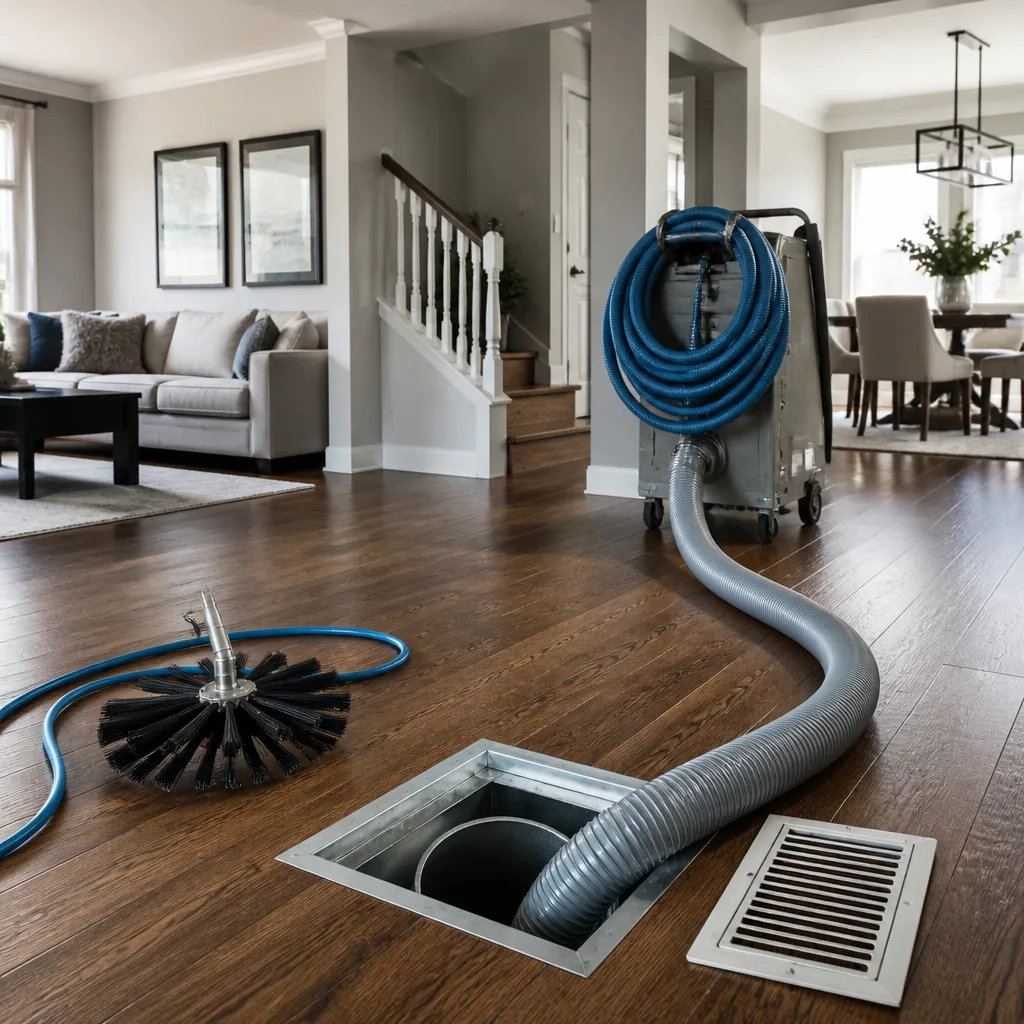 Whole-home duct cleaning
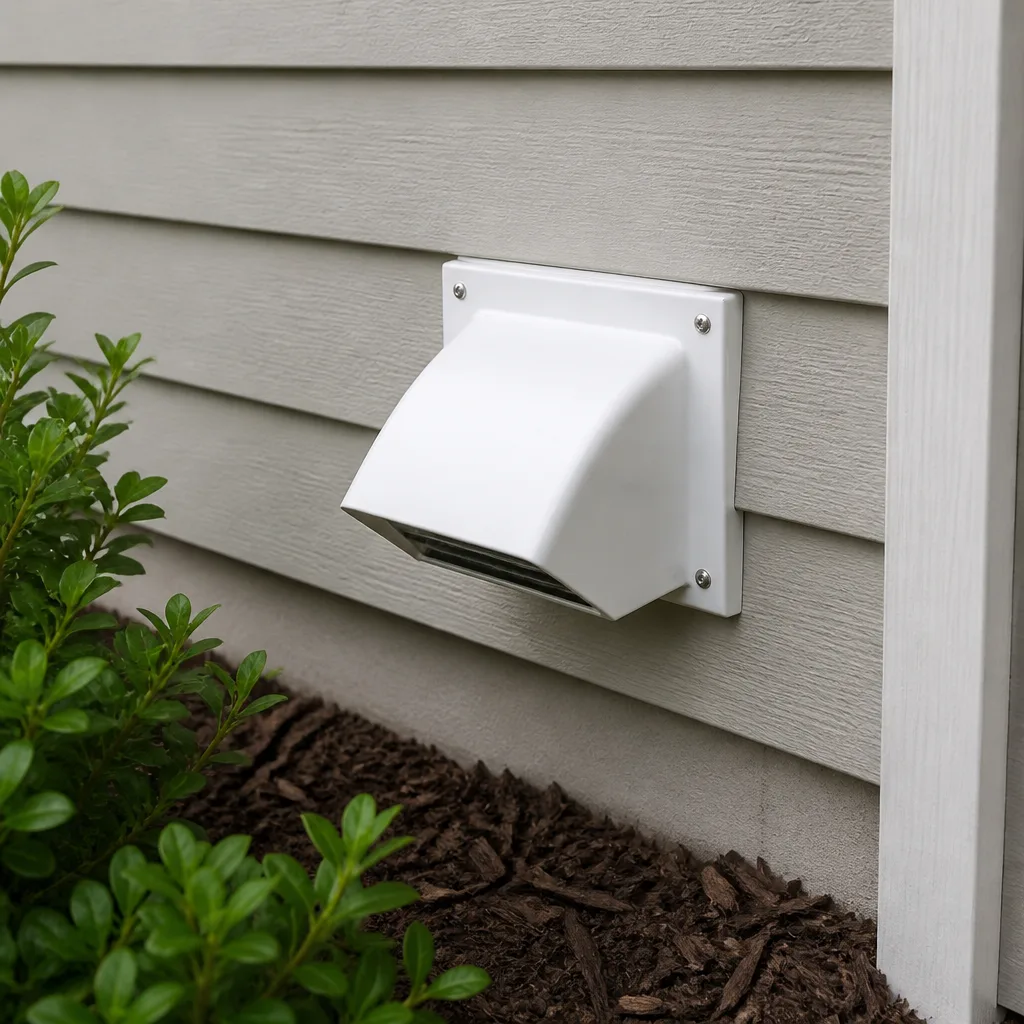 Dryer vent cleaning
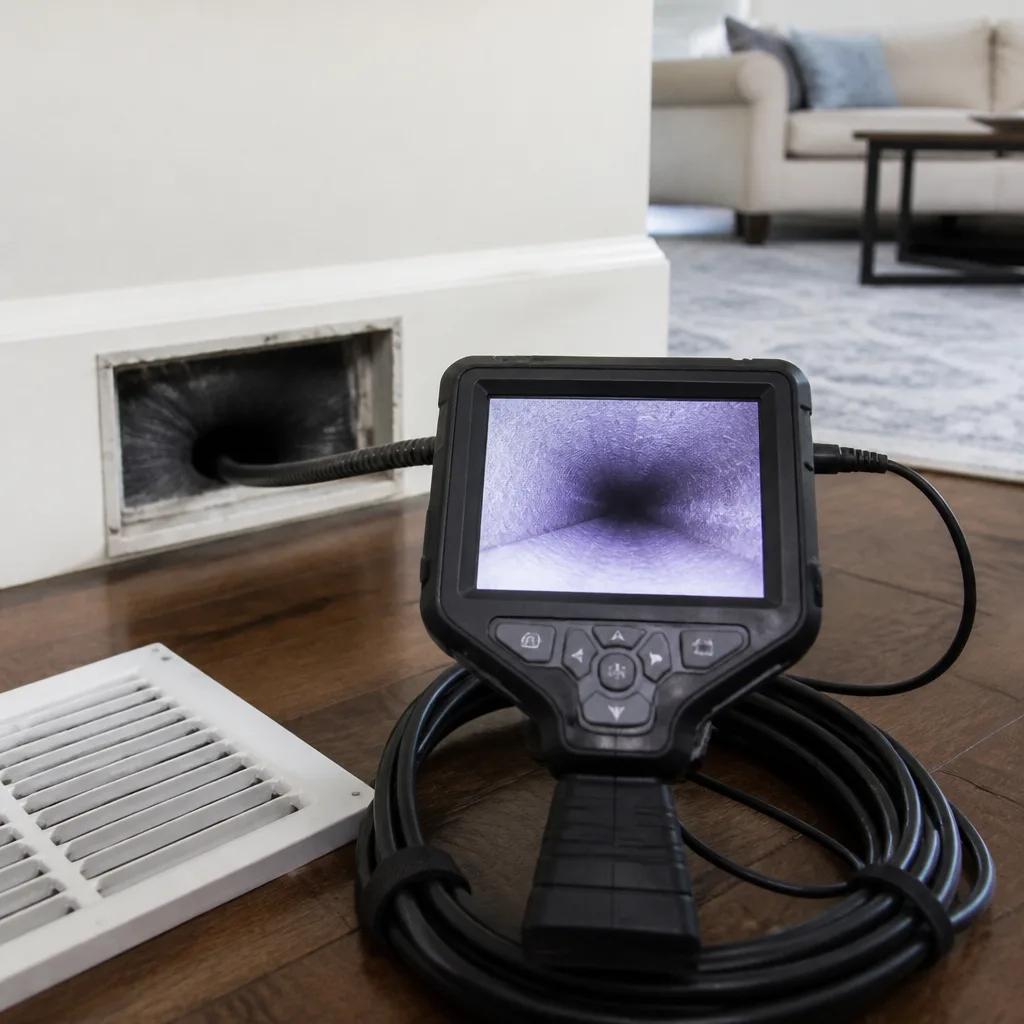 Camera inspection
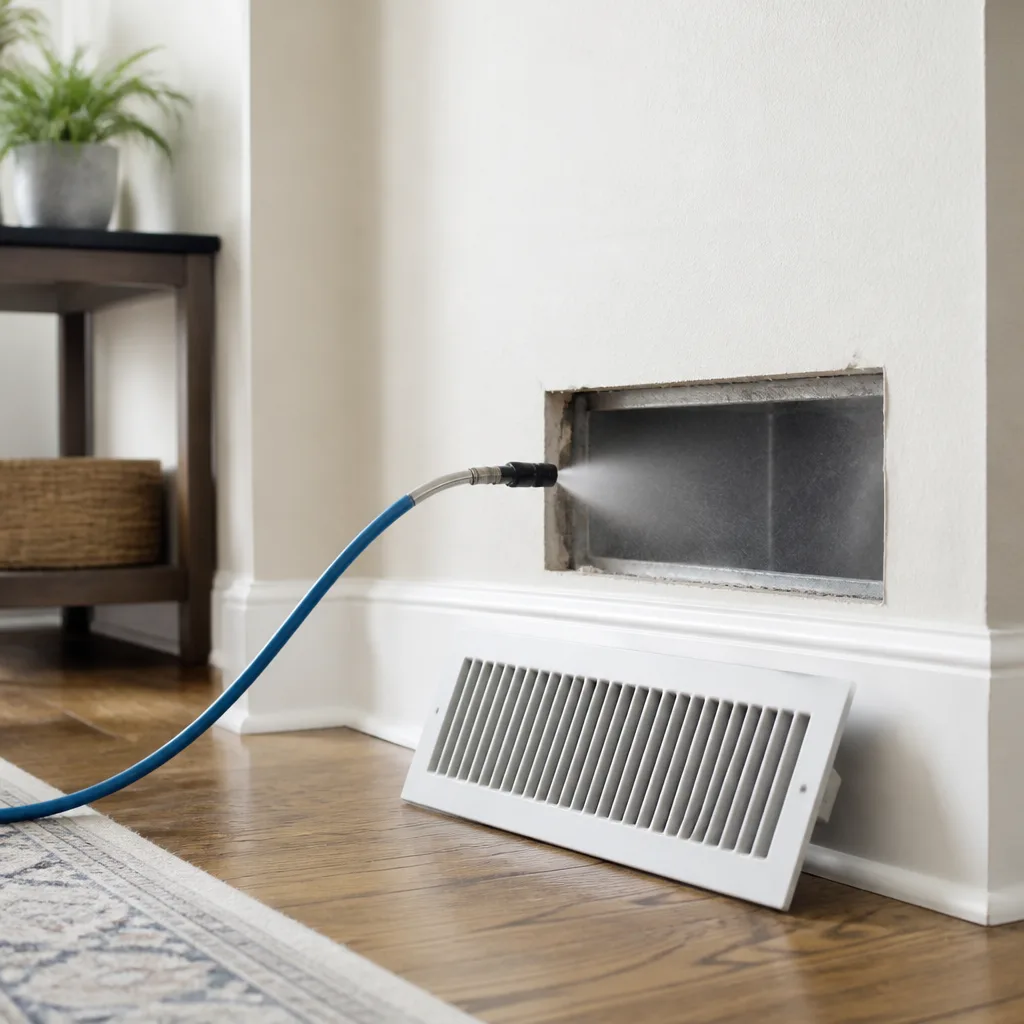 Sanitizing & deodorizing
Whole-system duct and dryer vent check with before-and-after photos - you see exactly what came out of your vents
That "$99 whole-house special" is a bait ad - the real number appears once they are in your hallway, or the "clean" is a shop-vac at the register. We photograph the inside of your ducts before and after instead.
Air Duct Cleaning Maintenance Checklist for Eagle Rock Homeowners
Most ductwork problems don’t announce themselves. They build slowly, inside a system nobody looks at, until a homeowner notices dust settling faster than usual or a faint smell when the heat kicks on. The common misconception is that a filter change covers it. It doesn’t. Your filter catches what reaches it; everything downstream of the filter is on its own. What follows is a checklist you can actually run, built around how homes in Eagle Rock are put together and how the local air behaves through the year. You’ll learn what to inspect monthly, quarterly, and annually, which duct types need the closest watch, and which findings call for a trained technician.
Quick Answer
A practical air duct maintenance checklist for Eagle Rock homeowners covers three rhythms: monthly filter and vent checks, quarterly inspections of accessible duct runs and the air handler, and an annual whole-system review of ducts, HVAC components, and dryer vent. The checklist works best when it’s matched to the house – the duct material and the filter rating matter more than the calendar. Anything involving a disconnected run, visible mold, pest debris, or a coil you can’t reach should go to a professional.
Styles & brands we work with
- Whole-home duct cleaning
- Dryer vent cleaning
- Camera inspection
- Sanitizing & deodorizing
Table of Contents
- Monthly Tasks: The Ten-Minute Walkthrough
- Quarterly Tasks: Going Deeper Into the System
- Annual Tasks: The Full-System Review
- Seasonal Pressure Points in Eagle Rock
- How to Inspect Ducts Without Professional Tools
- Filter Ratings and Replacement Timing for Eagle Rock Air
- Checklist Items for Older Flex and Galvanized Ducts
- Homeowner Fix vs. Professional Assessment
Monthly Tasks: The Ten-Minute Walkthrough
Monthly work is mostly looking. You’re establishing a baseline so that changes jump out at you later. Do the same sequence each time and note anything different.
- Check the filter. Hold it up to a light. If you can’t see through it, replace it. In a dusty season, this happens faster than the box suggests.
- Look at each supply register. Streaks of dark residue around the grille mean air is carrying something it shouldn’t. Wipe one clean and see how fast the streak returns.
- Check the return grille. The return pulls the most air in the house. If it’s noticeably dirtier than the supplies, the system is working harder than it needs to.
- Smell the air when the system starts. A musty note at startup is one of the earliest signals of moisture or biological growth somewhere in the system.
- Listen at the air handler. A rattle or a whistle can mean a loose panel, a failing belt, or a duct connection that has pulled apart.
- Walk past the dryer vent exterior flap. It should open freely when the dryer runs and close when it stops.
None of this requires tools beyond a flashlight. The point is pattern recognition: in our experience, homeowners who do this walkthrough monthly catch developing problems a season before they’d otherwise notice. In Eagle Rock, where the dry months push a lot of fine dust through the return, that head start matters.
Quarterly Tasks: Going Deeper Into the System
Once a season, set aside an hour. This is where you start to see the ductwork itself, not just the openings.
- Inspect every accessible duct run. Where ducts are visible in a garage, closet, or utility space, look for sagging, crushed sections, or disconnected joints.
- Check the drain pan and condensate line. Standing water under the air handler is a moisture source that feeds growth throughout the system.
- Vacuum the return grille and the space behind it. A damp cloth on the grille and a crevice tool behind it removes what a filter won’t catch.
- Test airflow at each register. A tissue held at the grille will tell you whether a run has lost pressure compared to the others.
- Clear the dryer vent path. Disconnect the dryer, look into the duct with a flashlight, and confirm the run is clear and the interior isn’t coated with lint.
- Look at the outdoor condenser and the intake. Clear debris and confirm nothing is blocking airflow into the system.
Quarterly checks are also when you compare notes: has a register that was fine three months ago started streaking? Does the musty smell come and go with weather? That comparison is what makes an annual professional assessment useful rather than generic.
Annual Tasks: The Full-System Review
Once a year, the checklist should cover the parts a homeowner can’t reasonably reach. That includes the interior of the main trunk lines, the evaporator coil, the blower wheel, and the full dryer vent run. This is the point where a professional assessment earns its place, and it’s also where the difference between surface cleaning and true system cleaning shows up.
An annual review should confirm:
- The full air pathway has been inspected, not just the supply and return vents
- Duct connections are intact and sealed where they’ve separated
- The evaporator coil and blower are clean
- The dryer vent is clear end to end, treated as a fire-safety concern separate from air quality
- Any biological growth has been addressed, not just vacuumed over
We clean the system, not just the vents, and that’s the standard an annual review should hold to. A complete review treats the air handler, the duct runs, the registers, and the dryer vent as one connected path. It also confirms whether ducts need air duct cleaning or HVAC cleaning, since the two solve different problems. Where repair is needed, it should be fixed and sealed rather than cleaned around. Professional-grade equipment like Rotobrush rotary brush systems and Nikro containment units exists precisely because a shop vacuum can’t reach what’s inside a duct run.
Seasonal Pressure Points in Eagle Rock
Eagle Rock’s year splits into three rough air conditions, and each one stresses the system differently. Building the checklist around them is what separates a local routine from a national template.
Dry season. Through the hot, dry months, fine dust and pollen move freely into the return. Filters load faster, and registers streak sooner. This is when monthly filter checks matter most, and when homeowners tend to find dust settling on furniture days after cleaning.
Wildfire smoke events. When smoke settles over the area, the system becomes a filtration line of defense. A higher-rated filter helps, but the system has to be clean to filter effectively. A duct run coated in old debris can’t do the job a clean one can. After a heavy smoke period, it’s worth checking whether the filter needs replacing ahead of schedule.
Marine-layer humidity cycles. The cool, moist mornings that roll in and burn off by afternoon put moisture into the air the system moves. In a home with any existing moisture issue, that daily cycle feeds growth. Biological growth in ducts shows up first as a smell, then as visible residue. It’s the reason sanitizing belongs in a complete maintenance routine rather than being treated as an upsell.
For Eagle Rock homeowners, the practical move is to schedule the annual review at the end of the dry season, after the dust has done its work and before the damp mornings return. That timing catches the debris and any growth before both settle in.
How to Inspect Ducts Without Professional Tools
You don’t need a camera on a cable to spot most problems. You need light, a mirror, and patience. Here’s the sequence:
- Start at the return grille. Remove it if it lifts out. Shine a light into the run beyond. You’re looking for debris buildup, sagging duct, and joint separation.
- Follow the run as far as it’s visible. In many Eagle Rock homes, part of the run is accessible in a closet, garage, or utility space. Check the seams where sections join.
- Examine the air handler cabinet. With the power off, open the access panel and look at the blower and coil. Surface dust is normal; heavy buildup or standing moisture is not.
- Use a mirror for angles you can’t see directly. A small handheld mirror on a stick reaches past a bend.
- Check the exterior dryer vent. From outside, confirm the flap moves and that no lint is packed near the opening.
What to look for, specifically: dark residue on duct walls, soft or collapsed flex duct, tape that has dried and let go, streaks below a joint, and any visible growth. A short length of flex duct that’s crushed or torn is a repair item, not a cleaning item, and that’s the distinction to watch for.
Filter Ratings and Replacement Timing for Eagle Rock Air
Manufacturer replacement intervals assume a generic home. Eagle Rock homes don’t live in a generic climate. In dry months, a filter that would last three months elsewhere can load in six to eight weeks. During a smoke event, it can load in days.
On ratings, the common advice to buy the highest MERV number available is wrong for most homes. A filter that’s too restrictive for the system’s airflow can strain the blower and reduce performance. A moderate rating, changed on time, does more for the house than a high rating left in place too long. If you’re not sure what your system can handle, ask a professional before you change the rating.
A practical filter schedule for Eagle Rock:
- Low-dust season: check monthly, replace on schedule
- Dry season or heavy pollen: check monthly, replace sooner if the filter is visibly loaded
- Wildfire smoke events: check weekly, replace when loaded
For homes with a documented allergy concern, a filtration and air-quality setup adds a layer beyond the filter itself. We install Honeywell and Aprilaire air-quality components that work with the existing system. That’s a discussion for a professional assessment, not a homeowner checklist item – but knowing it’s an option is worth having when you review the system.
Checklist Items for Older Flex and Galvanized Ducts
The ductwork in a pre-1980 Eagle Rock home is usually a mix of two materials: galvanized metal in the main trunk, flexible duct running to the outer registers. Each has its own failure pattern, and each needs its own line in the checklist.
Galvanized metal duct. The main trunk is sturdy, but the seams are the weak point. Look for line them:
- Seams that have separated or tape that has dried out and lifted
- Rust spots, which signal moisture getting in
- Joints at branch takeoffs where a run has pulled loose
- Interior debris that has settled at the bottom of horizontal runs
Flexible duct. The most common failure in older homes is the crushed or kinked run. A flex duct that has been stepped on, compressed, or rerouted around an obstacle loses airflow to that register, and no amount of cleaning fixes it. Check for:
- Crushed or collapsed sections
- Torn outer jacket, exposing the insulation
- Runs that have sagged and lost their shape
- Connections to the register boot that have pulled free
These findings are exactly why we pair cleaning with repair and sealing. Cleaning a system with a disconnected run leaves the problem in place, and sealing it is what restores the system’s integrity. If your checklist turns up a crushed or disconnected run, that’s a fix-first item, not a cleaning item.
Homeowner Fix vs. Professional Assessment
Part of the checklist’s value is knowing where your work ends. Here’s the dividing line.
You can handle this:
- Filter checks and replacements
- Wiping down registers and grilles
- Vacuuming around the return and in accessible areas
- Visual inspection of accessible duct runs
- Clearing the exterior dryer vent flap and removing surface lint
- Noting smells, sounds, and airflow changes
Call a professional:
- Any sign of biological growth inside the system
- Disconnected, crushed, or torn duct runs
- Pest debris or nesting inside ductwork
- Heavy buildup inside the trunk or on the coil
- A dryer vent that’s packed with lint deeper than the opening
- System-wide airflow problems or a musty smell that returns
The safety line matters here too. The components inside an air handler involve electricity, and the system runs on line voltage. Never open a panel that requires tools beyond a simple access latch, and never attempt work inside the electrical section of the unit. Any work around the blower, the wiring, or a gas-fired unit should be handled by a trained technician.
Common Mistakes to Avoid
- Relying on the filter alone. A filter handles what reaches it. The duct runs, the coil, and the blower all collect what the filter doesn’t catch, and they don’t get better with a new filter.
- Buying the highest MERV rating available. A filter too restrictive for the system’s airflow can strain the blower. Match the rating to the equipment rather than assuming higher is better.
- Skipping the return grille in the walkthrough. In Eagle Rock homes, the return pulls more air than any supply. If you only inspect the supplies, you’re missing the dirtiest part of the system.
- Treating the dryer vent as an appliance chore. A packed dryer vent is a fire risk, and it needs a separate clearance check from the air-quality work on the HVAC side. Don’t collapse the two into one task.
- Cleaning around a disconnected duct. A run that has pulled loose from the register boot won’t be fixed by cleaning it. Repair and seal first, then clean.
- Waiting for a smell before inspecting. The musty note at startup is a late signal. The earlier signs are dust settling faster, streaks returning to a clean grille, and airflow dropping at one register.
- Assuming the annual review is optional. The parts a homeowner can’t reach are where the expensive problems live. A yearly full-system look is what keeps the checklist useful beyond the surface.
See the difference
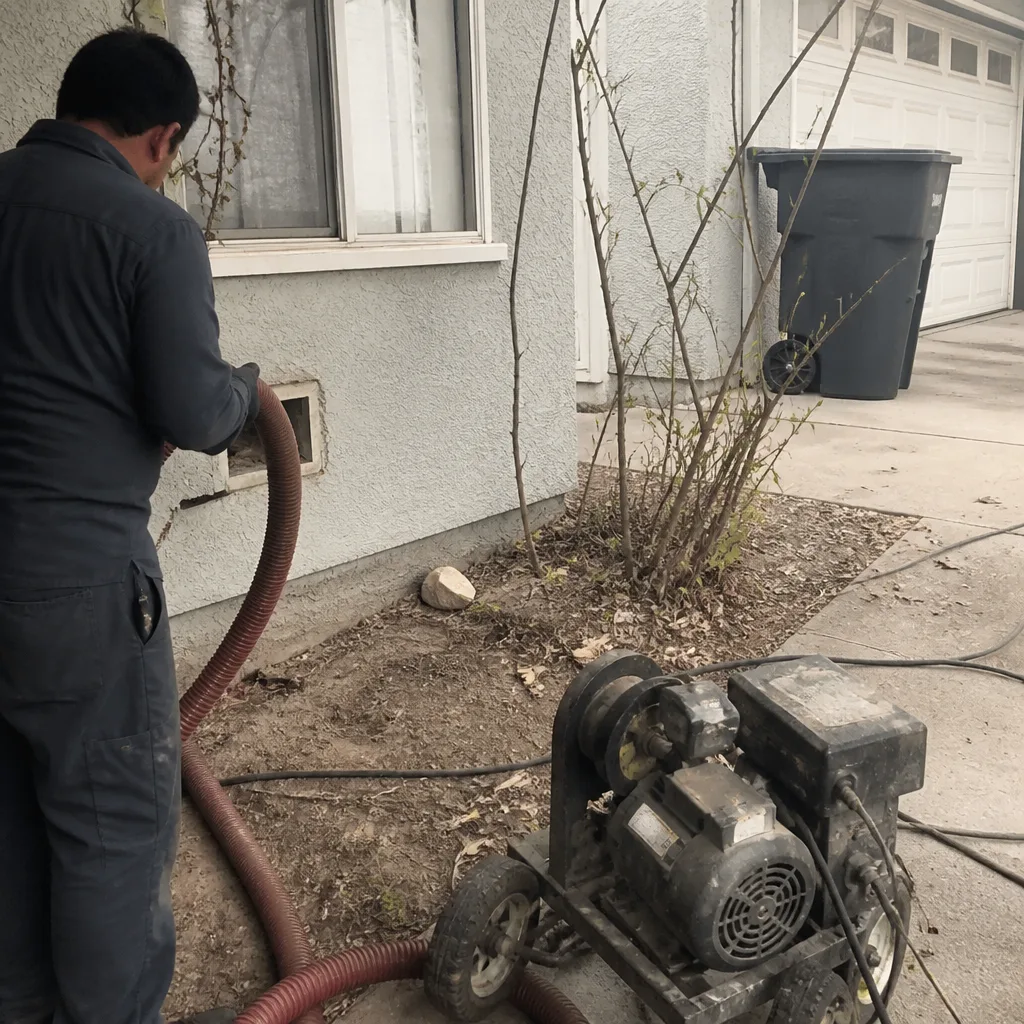 Before
 After
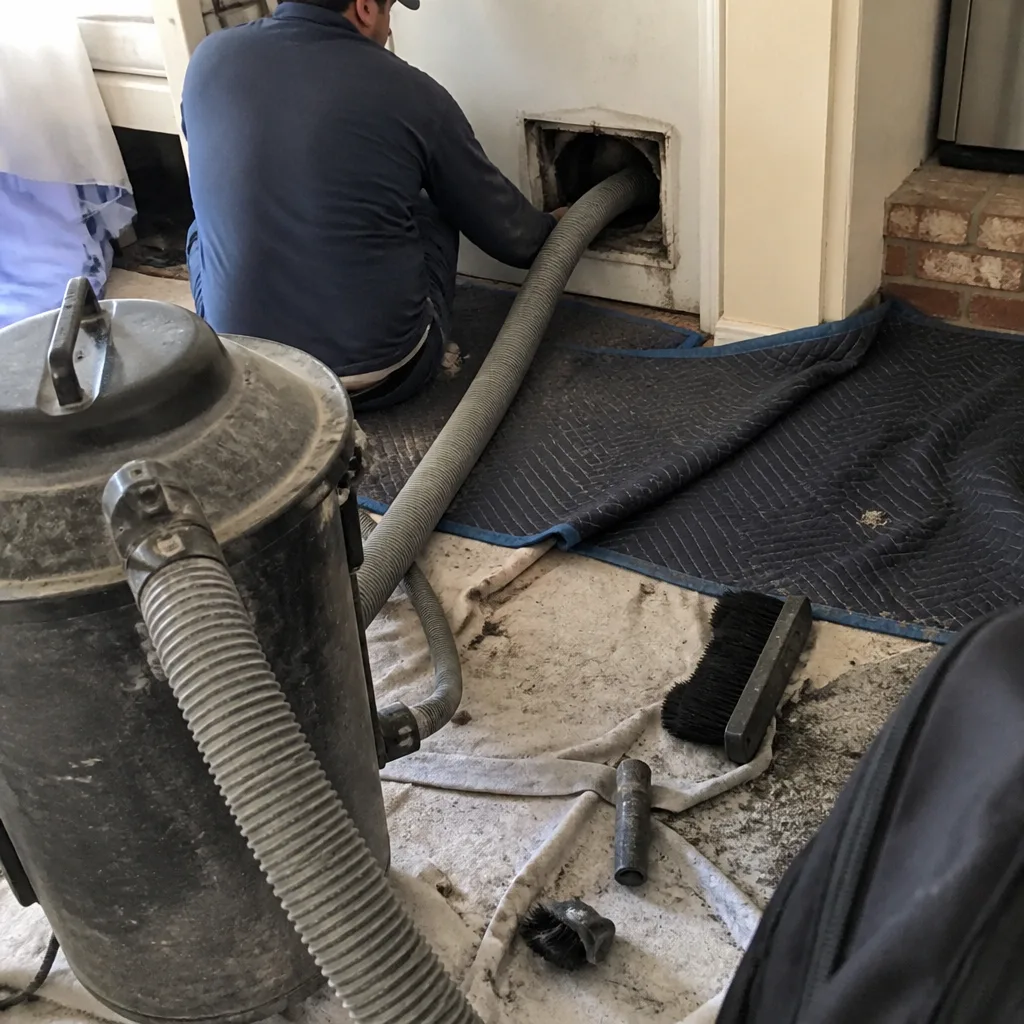 Before
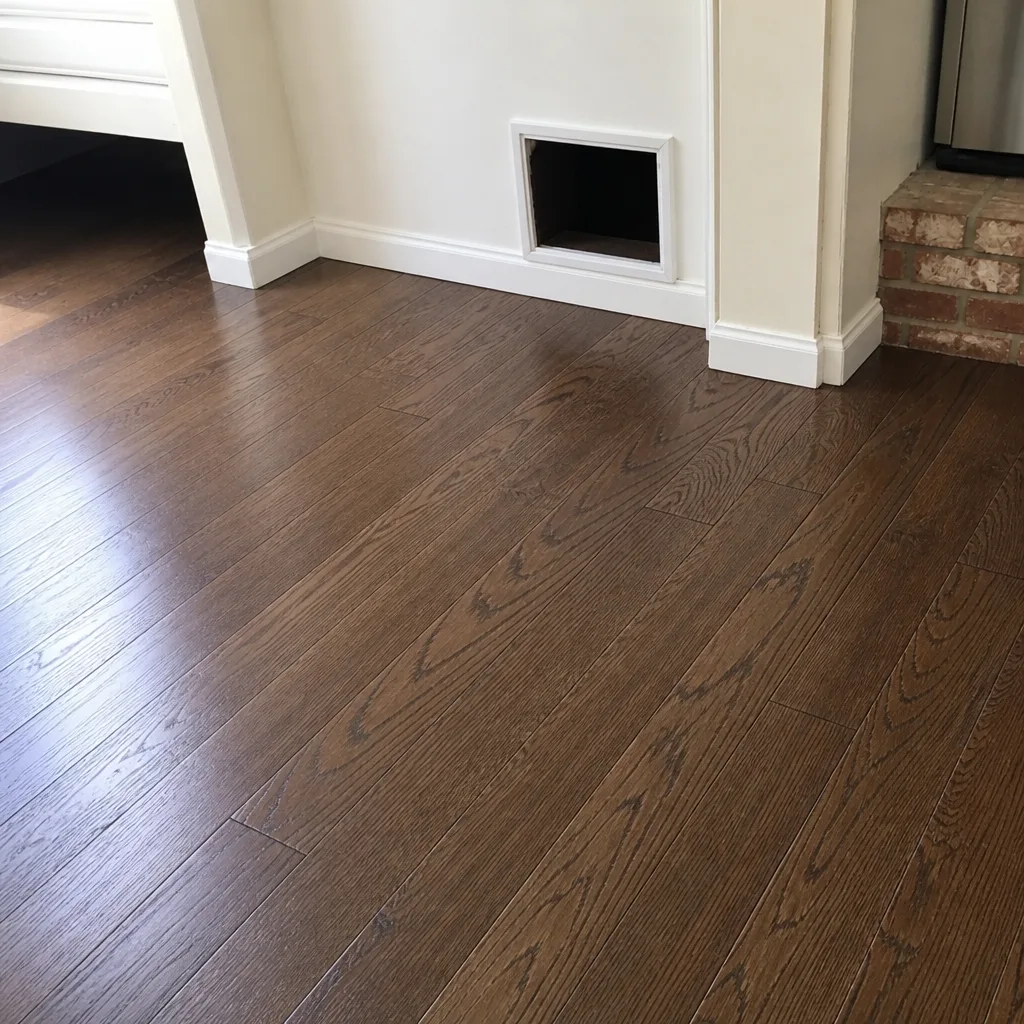 After
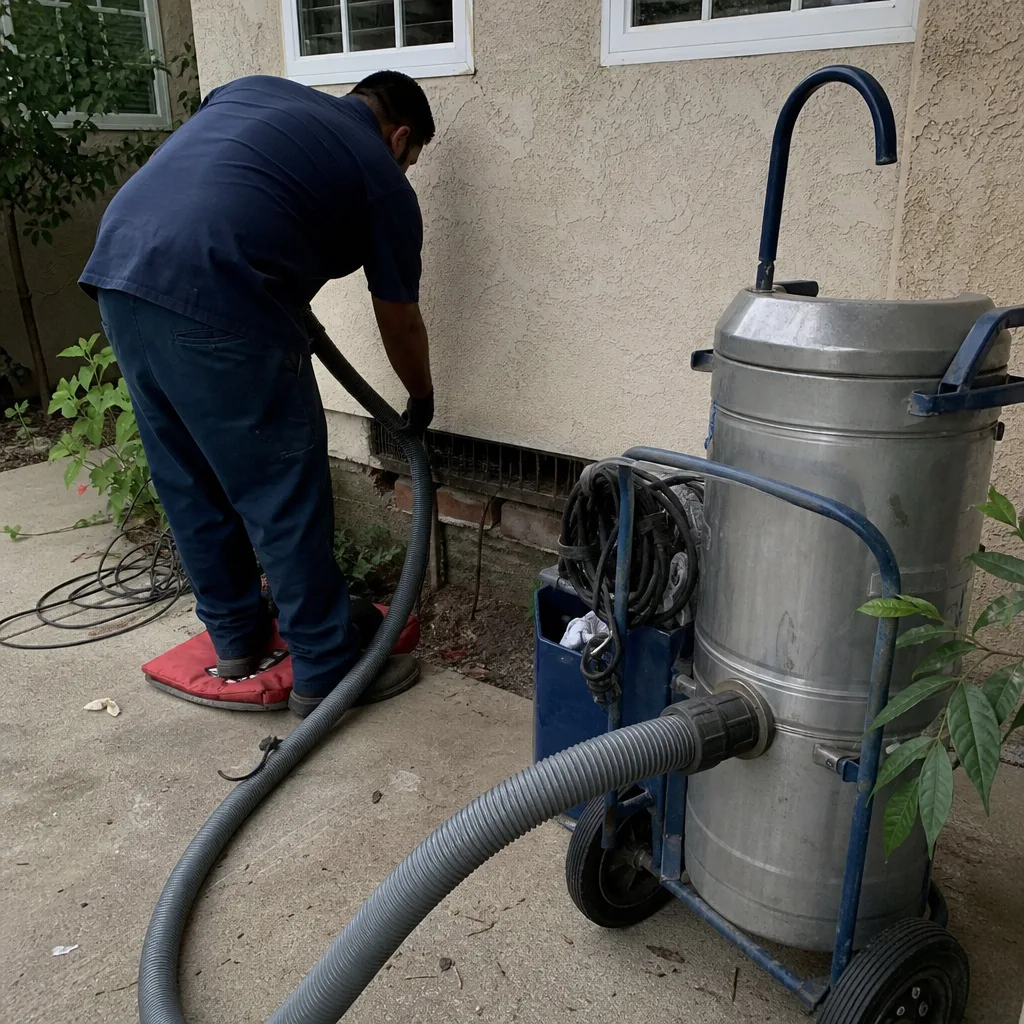 Before
 After
When to Call a Professional
Call a professional when the checklist surfaces something you can’t fix with a filter and a cloth. Visible growth, a disconnected run, pest debris, heavy buildup on the coil, or a musty smell that keeps returning after you’ve cleaned the registers – those all point to problems inside the system. The same goes for an annual review you’d rather hand off, since the trunk lines and the coil aren’t homeowner territory. A full-system assessment covers the entire air pathway, confirms whether the ducts need cleaning, repair, or both, and tells you what condition the system is actually in. Air Duct Cleaning Eagle Rock offers free estimates in Eagle Rock. Call (855) 683-8612. We answer 24/7. Fast dispatch from 7am to 7pm, Sunday through Friday.
Frequently Asked Questions
Once a year is the right interval for most Eagle Rock homes, with monthly filter and vent checks in between. The annual inspection should cover the trunk lines, the coil, the blower, and the dryer vent, not just the visible registers. Homes that have had smoke exposure or a moisture issue may need a second look sooner.
You can handle filter changes, register cleaning, visual checks of accessible runs, and surface work around the return. Anything inside the air handler, the trunk lines, or involving repair to a disconnected run should go to a professional. The electrical side of the system is not a homeowner task.
Duct cleaning focuses on the duct runs and registers; HVAC cleaning covers the air handler components like the coil and blower. A complete maintenance routine addresses both, since a clean duct system pulling air through a dirty coil doesn’t solve the air-quality problem. Our full scope treats the entire air pathway as one connected system.
A crushed, torn, or disconnected run is a repair item, and cleaning won’t fix it. If airflow at one register is weak, the flex duct may have collapsed or pulled free from the boot. Repair and sealing restore system integrity; cleaning then removes the debris the compromised run let in.
Yes. Dry-season dust loads filters faster, wildfire smoke events can load a filter in days, and the marine-layer humidity cycle puts moisture into the system. In Eagle Rock, the practical approach is to check the filter monthly year-round and more often during smoke events, with the annual review timed to the end of the dry season.
It should include the full air pathway: trunk lines, accessible runs, the evaporator coil, the blower, all registers, and the dryer vent. It should confirm whether repair and sealing are needed, and address any biological growth with sanitizing rather than just vacuuming. A review that only cleans the vents is a surface job, not a full-system one.
The Bottom Line
A duct maintenance checklist works when it’s matched to the house and the climate, not copied from a generic template. The monthly walkthrough builds your baseline. The quarterly checks catch developing problems in accessible runs. The annual review handles what you can’t reach. In Eagle Rock, the dry season, the smoke events, and the humidity cycle each stress the system differently, and the checklist should reflect that. Repair and sealing, a clean dryer vent, and a system-wide review are what keep the air pathway healthy. When the checklist turns up something beyond a filter and a cloth, that’s the moment to bring in a trained technician.
If you’d rather hand off the annual review or you’ve found something that needs a professional eye, call (855) 683-8612 for a free estimate. We answer 24/7. Fast dispatch from 7am to 7pm, Sunday through Friday.
Written by the team at Air Duct Cleaning Eagle Rock.